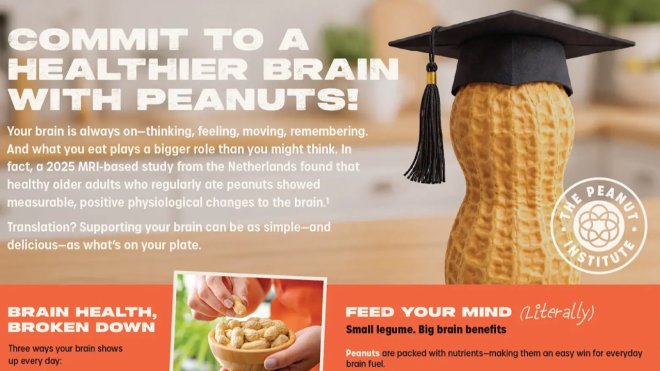
We’ve all heard the old adage “you are what you eat,” but an exciting 2025 study from the Netherlands showed just how true it is—as participants who ate peanuts showed positive, physiological changes in their brain that were measurable by MRI (magnetic resonance imaging).
It’s another reminder of how connected what we eat can be to our brain’s ability to think, speak and feel. So, if you’re committing to healthier habits in the new year, we have your back with science-based research for sharper thinking, improved mood, and long-term cognitive health!
When it comes to supporting brain health, there are 3 distinct areas to keep top-of-mind:
Physical Function: Our brain’s physical health, and how well it controls motor function for balance and movement. Cognitive Function: Our ability to think, learn and remember. 3. Emotional Function: Our ability to interpret, control and respond to emotions.
Supporting Physical Function
Think of your brain like a car’s engine— it needs the right fuel and regular tune-ups to get the best performance. In our case, that means getting an assortment of nutrient-dense foods into our diet, and ‘tuning up’ with regular exercise.
Keep Your Lobes Limber – The Importance of Exercise
For exercise, the World Health Organization recommends at least 150 minutes of moderate-intensity aerobic exercise (like a brisk walk or swimming) every week for adults, as well as muscle-strengthening activities on two or more days.1 (But to really feel the most benefits, shoot for 300 minutes.)
Feed Your Mind
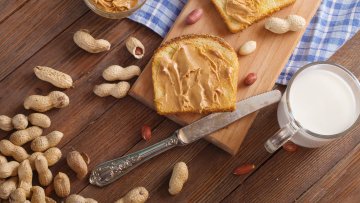
For nutrition, foods like peanuts and peanut butter can be great building blocks as part of a healthy diet for better brain function, with important nutrients like:
- Protein, a macronutrient that supports everything from repairing and creating cells to hormone production and immune response2—and peanuts have more than any other nut.
- In addition to other B vitamins like folate and thiamin, peanuts also contain vitamin B3, which supports healthy brain development.
- Arginine helps promote healthy blood flow throughout the body—including the brain—and peanuts have more than any other whole food.
- Copper and choline are involved in brain processes related to focus and concentration. Choline is also associated with better verbal fluency and memory.
Supporting Cognitive Function
While your body needs a wide variety of fruits, vegetables and more to support your overall health, many studies have shown that nut consumption in particular is associated with improved cognitive function—both in the near and long term.
A 2019 review of 19 experimental studies found a consistent pattern: that nut consumption provided a “protective effect” for cognitive function.
A 2021 study found that higher intake of legumes and nuts was associated with better overall cognitive performance and less decline in cognition. (Peanuts are botanically legumes, but with a nutrient profile that’s similar to nuts—so you get the best of both worlds.)
Similarly, a study of over 3,000 middle-aged participants found that increased intake of linoleic acid (which peanuts are a rich source of) was associated with higher cognitive scores 13 years later.
This echoed the findings of an earlier study that found older women that have a higher long-term intake of nuts (like peanuts) showed “better average cognitive status for all cognitive outcomes.”
In a separate study, eating more than 10g/day of nuts was associated with a 40% decreased likelihood of poor cognitive function.
Supporting Emotional Function
Healthy brain function isn’t just about how well you think—it can also help how you feel.
Eating nuts like peanuts regularly is associated with a 17% lower risk of depression.
Meanwhile, a study of college students found eating peanuts and peanut butter was associated with decreases in anxiety and depression levels, as well as improved memory.
What could be driving the results? Researchers aren’t yet certain, but an antioxidant in peanuts (p-coumaric acid) has been noted to help regulate stress and anxiety. Researchers even noted that it could have similar stress-reducing effects as leading anti-anxiety drugs.
Another antioxidant, resveratrol, has been shown to help fight inflammation while protecting against anxiety and depression.
Nourish Your Mind, One Bite at a Time.
If you’re committed to building a healthier brain, give it the fuel it deserves! Incorporate regular exercise into your routine, along with regular helpings of diverse, nutrient-dense foods like peanuts and peanut butter. They’re delicious, versatile, and packed with brain-boosting goodness to support your goals—today and for the future!
Source: The Peanut Institute Scoop – Jan. 15, 2026